More than 160 House Democrats voted against a pair of bills Thursday aimed at keeping foreign influence out of U.S. schools.
Both pieces of legislation passed with bipartisan support, though Democrats’ top ranks opposed each one.
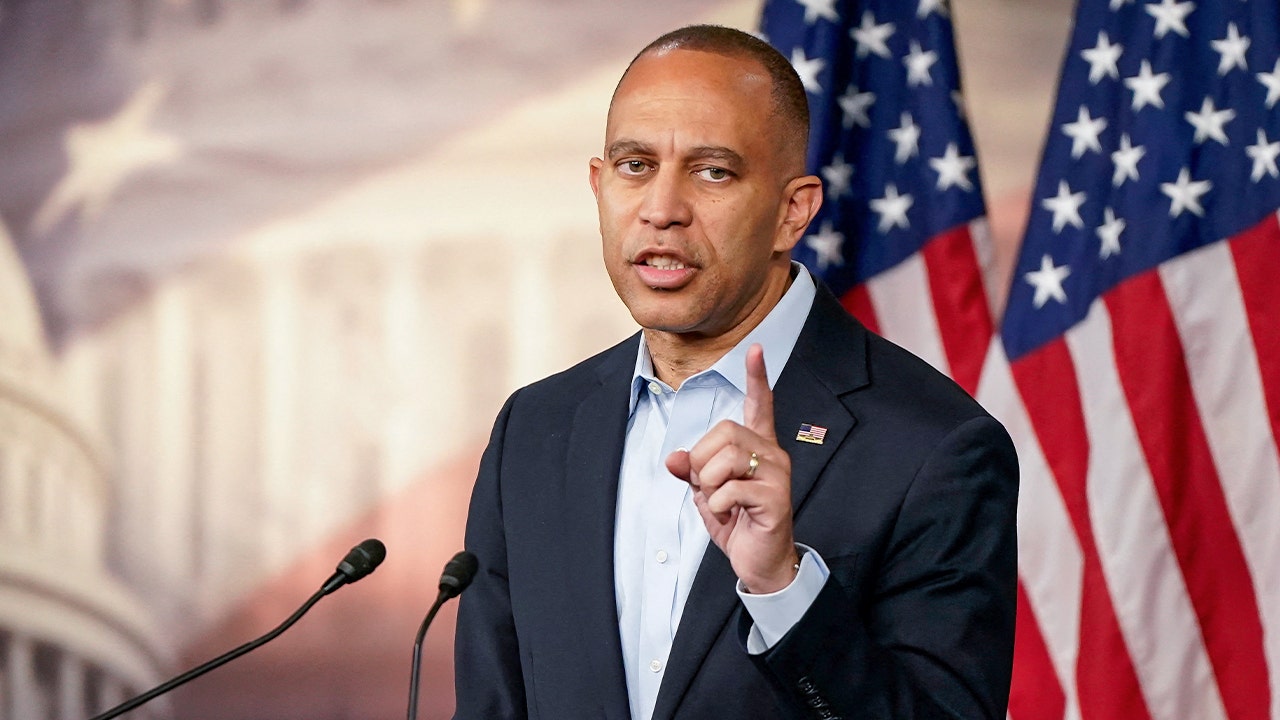
‘We just want to educate our children, focus on reading, writing and arithmetic, developing a holistic child, giving the ability to them to think critically,’ House Minority Leader Hakeem Jeffries, D-N.Y., told Fox News Digital when asked about the pushback.
‘We’re not going to be lectured by a group of Republicans who are dismantling the Department of Education in real-time. Literally 90% of the Department of Education as it existed last year is now gone.’
He accused Republicans of ‘attacking public education just like they’re attacking public health and attacking public safety.’
One of the two bills was led by House GOP Policy Committee Chairman Kevin Hern, R-Okla., and would block federal funds from elementary and secondary schools that have programs, cultural exchanges or other class-related activities that get dollars from the Chinese government.
It would also block federal funds from schools that either directly or indirectly get any kind of support from entities or people related to the Chinese government.
That bill passed 247–166, with 33 Democrats in favor and 166 against.
The second piece of legislation, led by Rep. Aaron Bean, R-Fla., would require every public elementary and secondary school to notify parents that they have a right to request information about any ‘foreign influence’ in their child’s school.
The notification would have to come via the school’s local education agency (LEA), bodies such as school boards that have administrative control over that and other schools in the area.
The second bill passed 247–164, with 33 Democrats in favor and 164 against.
Republicans argued these were commonsense bills aimed at keeping malign foreign influence out of U.S. schools.
But Democrats criticized both during debate on the House floor.
‘The bill gives no guidance on what acting directly or indirectly on behalf of means, or how you are supposed to know and how a parent’s contribution to a school program should be evaluated,’ Rep. Bobby Scott, D-Va., said. ‘And really, are you supposed to scrutinize all parents’ contributions or just those from parents of Chinese American students?’
