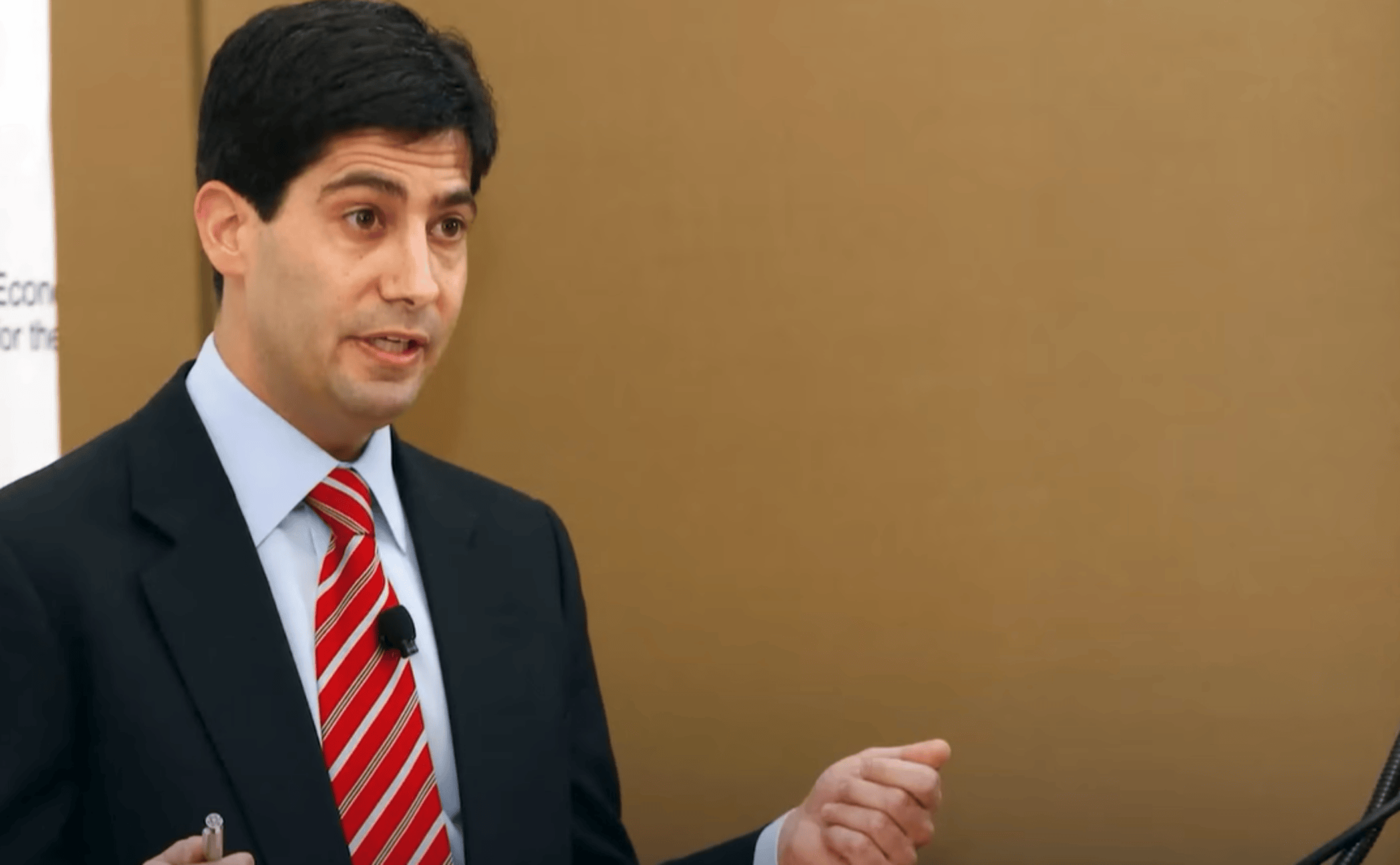
President Trump has nominated Kevin Warsh to succeed Jerome Powell, whose term as Federal Reserve Chair expires in May 2026. Trump has made no secret of his desire to influence monetary policy. He has consistently called for “Too Late” Powell to bring rates down and seems to believe the president should have a say in interest rate decisions. But the real problem goes beyond Mr. Trump: the next Fed chair will inherit far too much discretionary power.
The Fed has spent nearly two decades accumulating emergency authorities that never sunset and expanding its reach beyond its statutory mandate. It operates with little oversight from or accountability to Congress. The Fed’s ever-expanding powers, when combined with political pressure, is a recipe for disaster.
Three areas illustrate the pattern. First, consider the Fed’s standing overnight repurchase agreement (repo) facility. The Fed deployed a repo facility in 2008 and 2019 to deal with market disruption. But, in July 2021, it transformed this crisis tool into permanent market infrastructure. The Fed’s standing repo facility now provides up to $500 billion daily in liquidity. What began as emergency support became a permanent backstop with no sunset clause.
Second, consider the emergency lending powers authorized under Section 13(3). The Fed rolled out six emergency lending facilities in 2008: Primary Dealer Credit Facility (PDCF), Term Securities Lending Facility (TSLF), Asset-Backed Commercial Paper Money Market Mutual Fund Liquidity Facility (AMLF), Commercial Paper Funding Facility (CPFF), Money Market Investor Funding Facility (MMIFF), and Term Asset-Backed Securities Loan Facility (TALF).
The Fed’s emergency lending powers were purportedly constrained by Dodd-Frank (section 1101). The 2020 COVID-19 pandemic showed, however, how weak those constraints were. Four facilities (CPFF, PDCF, TALF, and the Money Market Mutual Fund Liquidity Facility (MMLF), which was just a slightly revised AMLF) were revived, and five new facilities were established.
These new facilities included the Primary Market Corporate Credit Facility (PMCCF), Secondary Market Corporate Credit Facility (SMCCF), Paycheck Protection Program Liquidity Facility (PPPLF), Main Street Lending Program (MSLP), Municipal Liquidity Facility (MLF) New. Whereas the older facilities might generally be reconciled with the Fed’s emergency lending facilities, the newer facilities permitted the Fed to extend credit to entities Congress never authorized it to support. What began as a crisis improvisation in 2008 became standard practice in 2020, with few constraints on what the Fed could do through its lending facilities.
Third, consider the regulatory authority the Fed has asserted in recent years. It has denied master accounts to cryptocurrency-focused institutions like Custodia Bank. A master account provides access to the Fed’s payment rails and has traditionally been granted to regulated depository institutions. Yet, the Fed has repeatedly denied applications from crypto banks. These denials demonstrate how discretionary power enables the Fed to pursue policy goals beyond its statutory remit.
The Fed is not blind to its expanded discretionary powers. Federal Reserve officials have openly acknowledged the institution’s expanded role. Former Chair Ben Bernanke defended the Fed’s crisis interventions as “necessary” to prevent financial collapse because, at the time, “no federal entity could provide capital to stabilize AIG and no federal or state entity outside of a bankruptcy court could wind down AIG.” But perceived necessity doesn’t grant legitimacy.
The accumulation of discretionary power increases the risk of politicization. When the Fed wields significant power and discretion over credit allocation, market functioning, and financial access, the president’s appointments to the Fed’s Board of Governors are all the more important. It is also more tempting to apply political pressure. Politicians will find it difficult to resist if the Fed might be used to improve their re-election odds. The Fed’s independence and credibility suffer as a result.
The accumulation of discretionary power — and trillions of assets on the Fed’s balance sheet — also makes financial institutions more dependent on the Fed. If financial institutions come to expect support from a big, powerful Fed in times of stress, they will be encouraged to take on excessive risk. This moral hazard creates a positive feedback loop, where dependent financial institutions require a bigger, more powerful Fed. The end result is a Fed that continuously increases its regulatory reach.
Perhaps worst of all, the accountability mechanisms in place have generally failed to keep up with the Fed’s expanded powers. Congress checks in twice a year. But, unlike other major federal agencies, the Fed lacks an independent inspector general. It has gained abilities to influence corporate and municipal bond markets, but it still operates under an oversight structure designed for a much narrower scope.
The Fed’s power problem is not limited to a particular chair or administration. It is institutional. Over the last two decades, the Federal Reserve has accumulated vast discretionary powers that enable mission creep and invite political pressure. Whoever follows Powell will inherit this vast discretionary power — and, if history is any guide, will be tempted to expand it further. But the Fed’s credibility and independence will suffer until its discretionary power is reined in.
