For weeks, President Donald Trump has promised the Iranian people that ‘help is on the way’ while positioning a massive U.S. naval armada within striking distance of Iran’s coast. But as the White House pivots toward a diplomatic summit in Istanbul Friday, analysts warn the president may face a growing credibility test if threats are not followed by action.
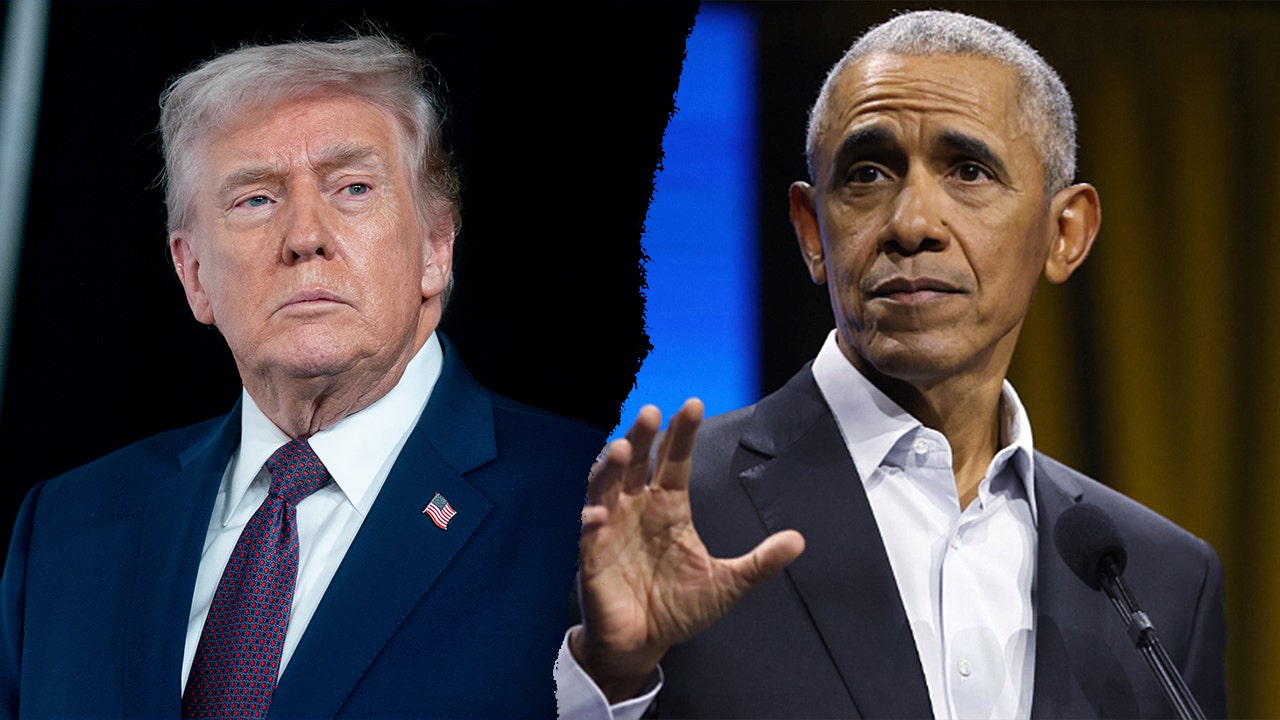
By threatening ‘speed and fury’ against a regime accused of killing thousands of protesters, Trump has drawn a red line — one that analysts say echoes President Barack Obama’s 2013 warning over Syria’s use of chemical weapons. Obama ultimately chose diplomacy over military strikes, a decision critics said weakened U.S. credibility and emboldened adversaries, while supporters argued it avoided a broader war and succeeded in removing large portions of Syria’s chemical arsenal. Trump now faces a similar debate as he weighs whether to enforce his own warnings against Iran.
Trump’s envoys are set to meet Friday in Istanbul with Iranian officials to press for an end to Iran’s nuclear enrichment program, curbs on ballistic missiles and a halt to support for proxy groups such as Hamas and Hezbollah — terms Tehran has shown little public sign of accepting. Trump has also demanded an end to the regime’s violent crackdown on protesters.
But signs of strain are already emerging around the talks.
Iran is now seeking a change in venue to Friday’s meeting — wanting it to be held in Oman, according to a source familiar with the request — raising questions about whether the summit will proceed as scheduled or produce substantive progress.
Tensions on the ground have continued to rise even as diplomacy is pursued. This week, U.S. Central Command (CENTCOM) said American forces shot down an Iranian drone after it aggressively approached the USS Abraham Lincoln while the aircraft carrier was operating in international waters in the Arabian Sea. CENTCOM said the drone ignored de-escalatory measures before an F-35C fighter jet downed it in self-defense.
No U.S. personnel were injured.
Hours later, Iranian naval forces harassed a U.S.-flagged, U.S.-crewed commercial tanker transiting the Strait of Hormuz, according to CENTCOM. Iranian gunboats and a surveillance drone repeatedly threatened to board the vessel before the guided-missile destroyer USS McFaul intervened and escorted the tanker to safety.
CENTCOM warned that continued Iranian harassment in international waters increases the risk of miscalculation and regional destabilization.
Despite weeks of delay, foreign policy analysts say the pause does not mean military action has been taken off the table.
‘If you just look at force movements and the president’s past statements of policy, you would have to bet on the likelihood that military action remains something that is coming,’ Rich Goldberg, a former Trump National Security Council official now at the Foundation for Defense of Democracies, told Fox News Digital.
‘I don’t think the window is closed,’ said Michael Makovsky, president of the Jewish Institute for National Security of America. ‘If the president doesn’t do something militarily, it would damage his credibility.’
The standoff is reviving comparisons to Obama’s 2013 decision not to carry out military strikes in Syria after warning that the use of chemical weapons would cross a U.S. ‘red line.’ The moment became a touchstone in debates over American deterrence.
The Syria episode remains a touchstone in Washington’s red-line debates. Critics argued Obama’s decision not to strike emboldened adversaries, while supporters said diplomacy prevented war — a divide resurfacing as Trump weighs his next move.
‘They have challenged the president now to try to turn him into Obama in 2013 in Syria, rather than Donald Trump in 2025 in Iran,’ Goldberg said.
Fox News Digital has reached out to Obama’s office for comment.
Trump has publicly encouraged Iranian protesters to continue their demonstrations, telling them in early January to ‘KEEP PROTESTING’ and promising that ‘HELP IS ON ITS WAY.’
U.S. officials, however, have previously said the pause reflects caution rather than retreat, pointing to concerns about retaliation against American forces and uncertainty over who would lead Iran if the regime were significantly weakened. Trump himself raised those questions in January, publicly casting doubt on whether any opposition figure could realistically govern after decades in exile.
‘As for the president, he remains committed to always pursuing diplomacy first,’ White House press secretary Karoline Leavitt said Tuesday. ‘But in order for diplomacy to work, of course, it takes two to tango, you need a willing partner to engage.’
‘The president has always a range of options on the table, and that includes the use of military force,’ she added.
Some analysts reject the premise that the administration has meaningfully slowed its military posture.
‘I don’t think they’ve paused action,’ said Gregg Roman, executive director of the Middle East Forum. ‘The more assets that the president deploys to the theater gives the U.S. more maneuvering room, rather than less.’
Roman pointed to continued U.S. force movements into the region, arguing the buildup signals preparation rather than restraint.
‘That’s not the behavior of a country backing away from military options,’ he said.
Fox News’ Aishah Hashnie contributed to this report.
